Project Plan
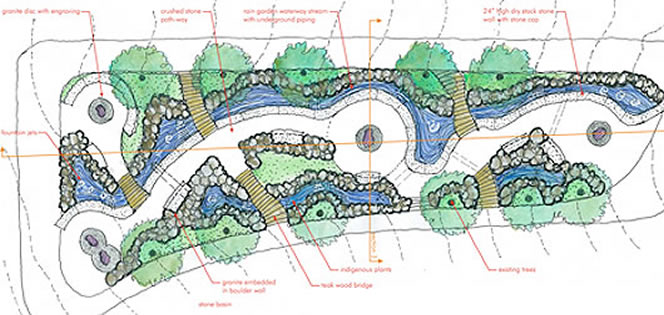
Local artist, Vinnie Bagwell is leading and defining the conceptual direction of the publi- art project titled “The Enslaved Africans’ Rain Garden.” This green space will commemorate enslaved Africans who resided at Philipse Manor Hall–six of whom were the first to be manumitted by law in the United States, 76 years before the Emancipation Proclamation. ArtsWestchester, the leading advocate for public art in Westchester County, is the project's fiscal administrator.
The idea of a rain garden has been chosen to marry culture with nature to demonstrate the aspects of sustainability and environmental responsibility that will make up the design. A rain garden is a planted depression that is designed to allow rainwater runoff the opportunity to be absorbed from impervious urban areas like driveways, walkways, and compacted lawn areas. This reduces rain runoff by allowing storm water to soak into the ground (as opposed to flowing into storm drains and surface waters which causes erosion, water pollution, flooding, and diminished groundwater). Rain gardens can cut down on the amount of pollution reaching creeks and streams by up to 30%. The concept of a rain garden began in the 1990s in the state of Maryland. They are now one of the fastest growing areas of interest for landscapes.
Phase I — Entailed the design and development of the five, 1/3-scale, bronze maquettes, site plan, and site-plan illustrations:
Artist Vinnie Bagwell’s artistic style is direct, intimate, and powerful. She envisions the transformation of the unused land adjacent the lawn to Philipse Manor Hall as a stirring composition of five portraits of enslaved Africans going about their daily lives with dignity and elegance which will inevitably engage the heart and mind of their viewers: A young woman carrying fish, while balancing a bucket on her head, the determination of an elder, who tends the garden, a report of honor from a boatman, and the camaraderie between siblings. They are all met on a serpentine path, which leads visitors from one to another. Text-in-pavement and -in-seating will aid in putting the visuals in context. Each of the sculpture’s vignettes or decisive moments take place at different vantage point in a garden setting, adjacent to the manor. The Yonkers African-American Heritage Committee managed in-kind service contributions. Town meetings were conducted to introduce the concept to the community, to make clear the goals and strategies.
Phase II — Entails the sculpture enlargement(s) and installation of the rain garden. Among others, visual-arts, photography, and film students will participate in a series of workshops that introduce the elements of design as well as creating the armature, mold-making, and lost-wax bronze casting. Students will attend planning sessions with the architectural landscaper to design the site plan and develop green-fielding strategies for the rain garden, learning hands-on how to develop responsible landscaping solutions to better the ecology and preserve green space for future generations. Other workshops will concentrate on combining the students' technical know-how with the conceptual and organizational skills required to develop a well-rounded documentary. |
• Local History
• First Freed Slaves
|